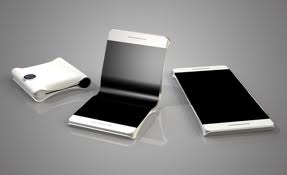
Your phone will one day be as flexible and thin as a piece of paper. In 2008, Nokia released a product called Morph as a vision of the future of mobile phones, with a flexible screen. Around three years later, the company showed continued interest in flexible screens with the launch of the Kinetic prototype.
In 2013, the popular smartphone manufacturer Samsung released its first phone with an OLED display, known as YOUM. Years of research went into it; the company finally made a prototype OLED screen out of plastic, replacing the glass screen to make it more flexible.
In October of the same year, LG rolled out its prototype, the LG G Flex, which is due to be released this year. But according to LG's website, the phone will have limited flexibility; you can bend it up to 180 degrees.
OLED is made of hydrogen and carbon. When an electrical current is applied, it produces light. It is around 200 times thinner than a human hair and is transparent. Moreover, the components of an OLED screen consist of light-emitting layers, electrodes and a substrate.
Recently, researchers have been working to find an alternative material to replace ITO, the conventional electrode used in OLED technology. Graphene was discovered in 2004.